
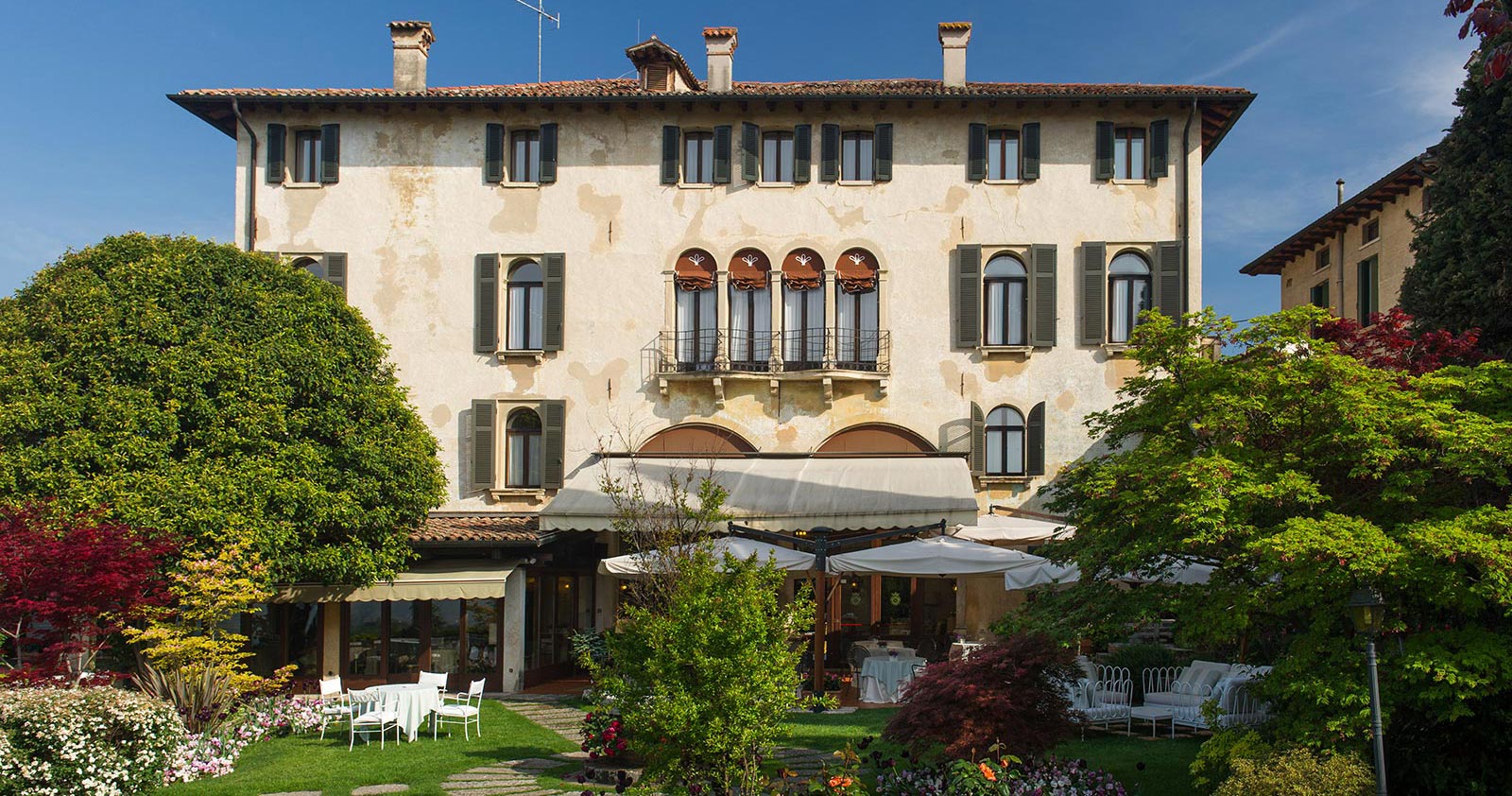
An Ottoman post office in Thessaloniki, a villa shaped by a poet, an aristocrat and a Venetian hotelier in the hills of Asolo, and a Swedish manor whose story stretches back to the 14th century. Across Europe, some of its most remarkable historic hotels survive because each generation finds a way to carry their stories forward.
A historic hotel is never really the work of one generation.
Buildings change hands. Cities grow around them. Fires, wars, fashions and fortunes leave their mark. What survives is often the result of people deciding that an old building still has a place in the present.
In this piece, we explore three very different hotels with one thing in common: their histories have not simply been preserved, but celebrated and carried forward into the present.
Capsis Bristol Boutique Hotel, Greece: a family story meets a city’s past
On the corner of Katouni and Oplopoiou streets stands the 1860 building that is now home to the Capsis Bristol Boutique Hotel. Built when Thessaloniki was still part of the Ottoman Empire, it once housed the city’s Ottoman Post Office – a place through which letters, news and stories travelled between Thessaloniki and the wider world.
Its setting matters. Ladadika, close to the port, was one of Thessaloniki’s old commercial quarters, and the building has witnessed extraordinary change around it.
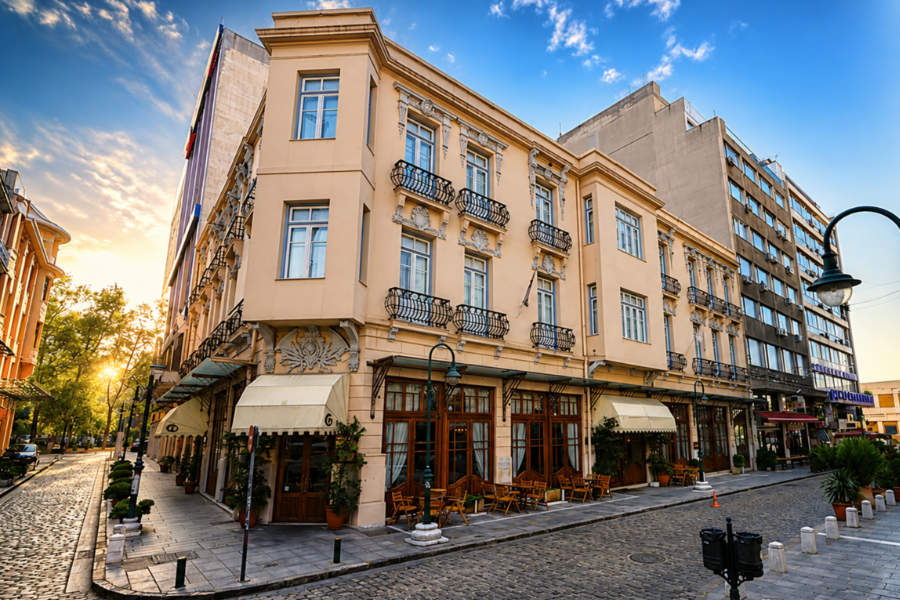
In August 1917, a devastating fire swept through central Thessaloniki. Much of the city centre was destroyed and tens of thousands of people were left homeless. The Bristol building survived – one 19th-century structure remaining amid a city that would be substantially reshaped.
More than a century later, another history is entwined with the building: that of the Capsis family.
According to the family, its roots in hospitality go back to Cairo in 1911, when it opened its first hotel. It later returned to Greece, where successive generations established a lasting presence in Greek hospitality. Today, that tradition continues at the Bristol.
There is a balancing act to running a historic hotel. Guests still need comfort and all the practicalities of a modern stay, while the building itself should retain something of the place a traveller might have encountered a century ago.


The Bristol underwent a complete restoration in 2000 and was renovated again in 2018. Today, its 20 rooms and suites occupy a building whose scale and character remain central to the experience.
Here, the past isn’t viewed from behind glass. You sleep in it, walk through it, drink your morning coffee in it, then step outside into the city that grew up around it.
Villa Cipriani, Italy: a villa with many lives
In Asolo, in the hills of Veneto, custodianship looks rather different.
Villa Cipriani has accumulated owners, influences and identities over centuries. Built during the Palladian era and altered substantially in the 18th century, the villa was purchased in 1889 by the English poet Robert Browning, who had a longstanding connection with Asolo. According to the hotel’s history, it was during Browning’s ownership that the property acquired much of the Tuscan character seen today.

In 1902, the property was sold to a wealthy Venetian family and used for many years as a holiday home before eventually being rented out and converted into an inn.
Then, in 1962, Rupert Guinness, the second Earl of Iveagh, purchased the villa. He later brought in Giuseppe Cipriani – founder of Harry’s Bar in Venice and the hotelier associated with the Bellini and carpaccio – to transform the old inn into a country hotel.
Villa Cipriani was born.


The hotel became part of CIGA Hotels in 1974 and later joined Sheraton and Starwood. In 2012, Treviso industrialist Massimo Zanetti purchased the property. Since then, ongoing conservative restoration has aimed to maintain its character while adapting it for contemporary guests.
Walk through Villa Cipriani today and those different chapters overlap: the villa itself, its gardens and the landscape that helped make Asolo a destination for writers, artists and travellers.
Its history is less about one family holding on to a place for generations than about something passing carefully from one set of hands to another.
A poet saw something worth shaping here. An aristocrat saw something worth saving. One of Venice’s great hoteliers saw the makings of a hotel. Under its current ownership, that process of conservation continues. The result is not one preserved moment in time, but many of them layered together.
Toftaholm Manor, Sweden: six centuries beside the lake
If Villa Cipriani’s history has unfolded through changing owners, Villa Toftaholm’s is remarkable simply for its length.
Set beside Lake Vidöstern in Småland, southern Sweden, Toftaholm traces its beginnings to 1389, when Jöns Skötta established the estate. After being raised to the nobility as a Stenbock, he developed Toftaholm as a manor house. Under the Stenbock family, it grew to become one of the largest estates in Småland.

By 1460, Toftaborg Fort had been completed by Skötta’s grandson, Gustav Olsson Stenbock the Elder, to help protect the estate and surrounding population during periods of conflict between Sweden and Denmark.
As you might expect of a place this old, the documented history comes with its share of legend. One story tells of an underground passage connecting the fort with the manor, supposedly used by King Gustav Vasa to escape approaching Danish troops. Two rings intended as a gift are said to have been lost somewhere in the tunnel.
The buildings themselves have survived more tangible threats.


A major fire destroyed the manor’s main building in the mid-19th century. The house seen today was constructed in 1871, while an older part of the estate survives nearby: the inn Den Gyllene Abborren, dating from 1640, with open fireplaces, wooden floors and cellar vaults. It is still used for events today.
Toftaholm remains very much a working hotel.
Its present owners, Eva and Pelle Hjortblad, describe their approach as combining the hospitality of an old manor with everything contemporary guests expect. That balance goes to the heart of keeping a historic property alive: retaining enough of the past to make the place distinctive, while allowing it to work for the present.
At Toftaholm, centuries of Swedish history coexist with dinner, a night’s sleep and a morning beside the lake.
Keeping history in use
Thessaloniki, Asolo and Småland could hardly be more different, but all three hotels show how historic buildings survive: by changing carefully, while holding on to what matters.
That, perhaps, is the real work of a keeper of history – knowing what is worth carrying forward.


 Italiano
 English
 Deutsch
 Français
 Español