
The hotels we remember best often have their own rhythm. Tea arrives with homemade biscuits. A walk becomes the prelude to dinner. An hour in the spa borrows its inspiration from another century. Across Europe, these small rituals can turn a beautiful historic hotel into somewhere you want to return to.
There are certain things you start doing only on holiday.
You linger over breakfast. You sit outside simply because there is a garden worth sitting in. You change for dinner. You take a walk with no particular destination, order tea in the middle of the afternoon or disappear into a spa while daylight fades outside.
At the best historic hotels, none of this feels particularly programmed. The building, landscape and people establish a rhythm of their own; stay for a few days and you begin to fall into it.
Sometimes the ritual has deep roots in the history of the place. Sometimes it is simply something guests have discovered is a very pleasant way to spend an hour. Either way, these small habits can become the things you remember long after you have forgotten the thread count.
Tea, biscuits and nowhere else to be
Ghan House, Carlingford, Ireland
At Ghan House, the ritual is partly about knowing when to head out — and when to come back.

From the Georgian house, guests can set off by bike towards the Carlingford Lough Greenway, with Carlingford Lough and the Mourne Mountains providing the backdrop. It is exactly the sort of outing that earns a slower afternoon on your return.
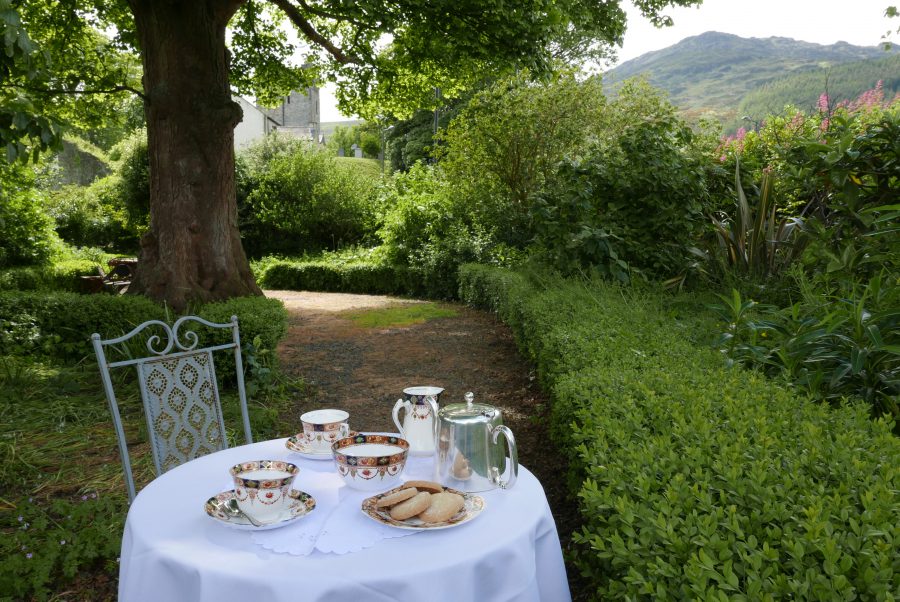
Back at the house, the pace changes. Wine tastings can take place on the lawn, while something as simple as tea and homemade biscuits becomes a perfectly good reason to sit outside for another half-hour.


The gardens bring their own sense of time. One tree in the grounds is around 299 years old, making it roughly as old as Ghan House itself — an impressive bit of perspective when your biggest decision is whether to have another biscuit.
There is plenty to tempt you back out into Carlingford. But part of the pleasure here is the return: bike put away, glass poured, tea brought out and nowhere more pressing to be.
The royal art of slowing down
Hotel Milenij, Opatija, Croatia
Long before wellness became a travel trend, visitors were coming to Opatija to rest, recuperate and spend time by the Adriatic.
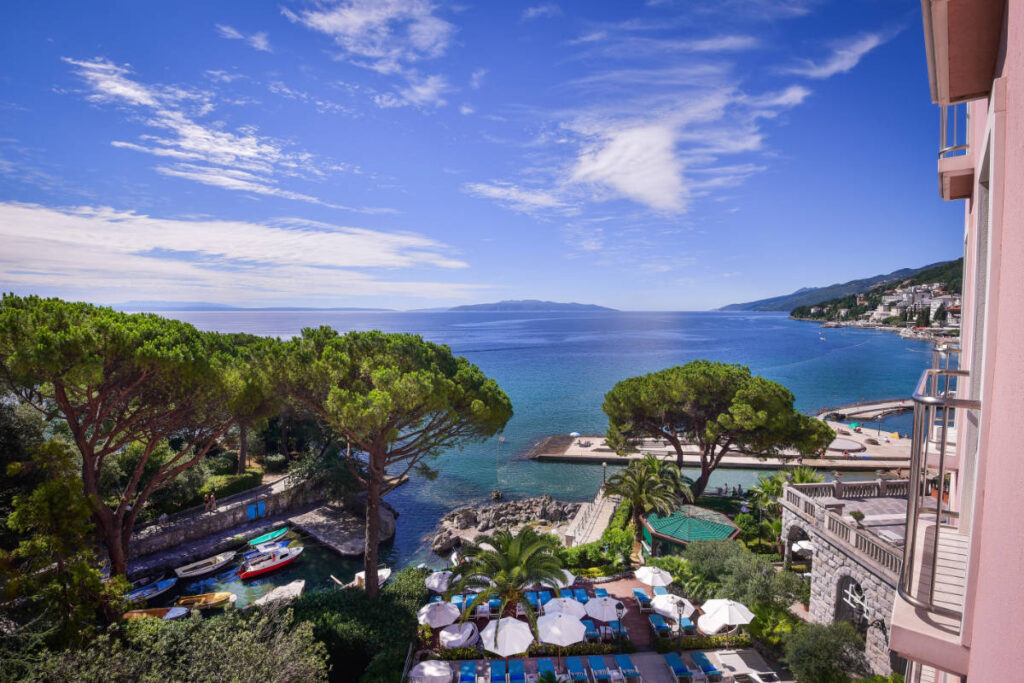
During the Austro-Hungarian period, the resort became a fashionable retreat for European aristocracy, drawn by its mild climate, sea air and reputation for health and wellbeing. That history still provides the backdrop at Hotel Milenij.
Its modern version of the ritual unfolds at Milenij Spa, inspired by Empress Elisabeth of Austria — Sisi — and her dedication to beauty, movement and personal wellbeing. Turkish and Finnish saunas, heated loungers, a salt bath and a tranquil pool overlooking Kvarner Bay and Opatija’s famous seafront sculpture, La jeune fille à la mouette, all make a convincing argument for setting aside an hour or two.

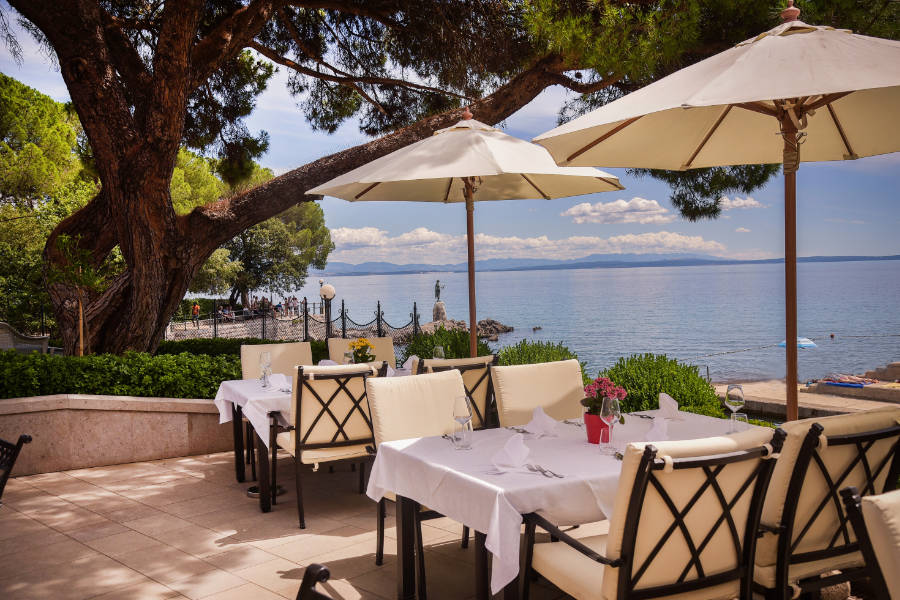
Then there is the Lungomare. Opatija’s historic seafront promenade runs past grand villas, gardens and the Adriatic, making a walk by the water a natural companion to time spent in the spa.
Walk, swim, steam, repeat. More than a century on, Opatija remains very good at persuading people to slow down.
Gather round for a story
Hôtel Dalen, Norvège
At Dalen Hotel, history is not something you simply admire from a distance. Every evening, it gets told.
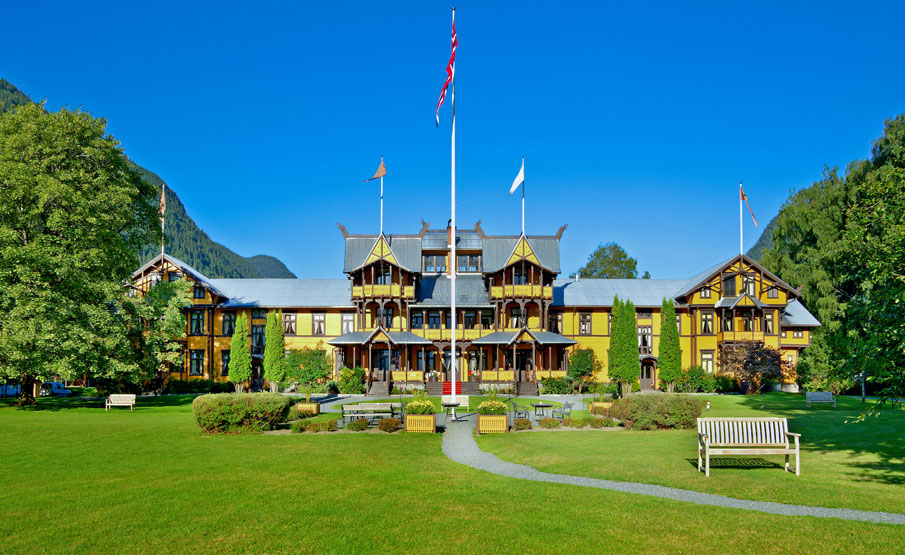
Each evening, guests gather in the hotel’s lounges to hear the story of Dalen — a ritual that feels entirely appropriate in a place that has been welcoming travellers since 1894.
Set at the end of Norway’s Telemark Canal, Dalen is a gloriously theatrical building, rich in carved timber and old-world detail, with grand lounges that seem designed for lingering. Once dinner is over, the fireplace lounge offers a natural next destination.


And then the stories begin.
It is a wonderfully simple way of bringing the hotel’s past into the present. Dates, former guests and old tales become something shared rather than something printed on a plaque or tucked into a guidebook.
After a day spent exploring Telemark, sitting beside the fire and listening for a while feels like exactly the right ending.
Some historic hotels preserve their stories. At Dalen, they still tell them aloud.
The evening still has an order here
Hotel Falken, Wengen, Switzerland
At Hotel Falken, the evening still unfolds in stages.

Start with a drink in the bar, once the hotel’s reading room. Then move through to dinner in the historic dining room, where chandeliers, furniture and other details have survived from the Falken’s early years. Afterwards, there is the Piano Room — a space that has seen music, dancing, sing-alongs and generations of guests come and go since the hotel opened in 1895.
There is something appealingly old-fashioned about the sequence: aperitif, dinner, music, nightcap. No rushing out to find the next place. No need to plan an evening elsewhere.


Perhaps that comes naturally to a hotel that has remained in the same family since it opened. Traditions here have had plenty of time to settle in.
By the end of a stay, moving from bar to dining room to piano room can start to feel less like a hotel itinerary and more like simply how evenings are done at the Falken.
And perhaps that is the secret of a good hotel ritual. Nobody has to tell you it is a tradition.
You simply find yourself doing it again.


 Français
 English
 Deutsch
 Italiano
 Español